
Five Things to Know Before You Submit Your PDG B-5 SMART Grant Application
This year's PDG B-5 isn't a planning grant or an implementation grant. It's a 12-month data, technology, and analytics grant. Prior planning is the price of entry.
On October 27, the National TA Collaborative to Maximize Federal Early Childhood Investments hosted a webinar for states applying for the PDG B-5 SMART grant. About 30 states joined (45 states and territories are eligible). Applications are due November 20 at 11:59 PM ET.
Since the Early Learning Challenge in 2011, a group of national organizations has come together for each grant cycle to support states as they apply for scarce federal system-building dollars. This year, the National TA Collaborative includes BUILD, Start Early, the Urban Institute, Child Trends, the Early Childhood Data Collaborative, NASLEE, the Alliance for Early Success, Center for Early Learning Funding Equity, First Children’s Finance, Help Me Grow National Center, NAEYC, Opportunities Exchange, Prenatal to Five Fiscal Strategies, LENA, and many others. Here is what my colleagues said, which I think every application team should hear.
Five things to know before you submit
- Start with your goal, not the technology. Carlise King of the Early Childhood Data Collaborative urged states to draw a straight line from one systems goal to the investment, the activities, and what you can measure in a year. Multiple activities are fine, but a collection of separate projects is not. Indicate what you will build, but more importantly, who will use it and what decisions it will support. For Option 2, reviewers want evidence that your data systems are actually in use, not just that they exist.
- Score the points. There are no Bonus Points for literary quality. Elliot Regenstein of Foresight Law + Policy put it most plainly: this application is not the place to wax poetic. Treat the rubric like a checklist, not a suggestion. The reviewers are holding a scorecard, not a literary critique sheet. Every explicit requirement in the prompt needs an explicit, easily findable answer in the text. It’s a chance to take 20-plus rubric categories, each worth three or four points, and earn as many as possible. Paste the rubric into your working draft and highlight it in a bright color so every writer can see it. Then designate one person to check that every paragraph earns points. As Diane Schilder of the Urban Institute reminded us, this isn’t a creative writing assignment. Repeat the question, then answer it.
- Finish by month 10. There are no rollovers and no no-cost extensions. Diane Schilder recommended working backward from month 12 and planning to be done by month 10, because schedules slip. Amend existing contracts and data sharing agreements rather than starting new ones; a new agreement can take six to ten months. And asking for a smaller amount carries no stigma. If anything, reviewers value feasibility, and smaller requests mean more states can be funded.
- Evaluation is not a last step; it is an ongoing cycle. Dale Richards of Child Trends described the Project Performance Evaluation Plan as a management tool, not a final-quarter report. Plan evaluation activities throughout the year. Choose measures directly attributable to this grant, include baselines, and set targets you can achieve within 12 months. Post evaluator RFPs and job openings before the award, contingent on funding, so work can start in month one.
- Treat partners and the match as commitments. My BUILD colleague Monique Fountain Hanna cautioned against over-pledging the 30 percent match. You will be audited on it, and every dollar must fall within the project’s scope and be documented. On Head Start integration, Danielle Ewen urged bringing Head Start in as a partner from the start, not an add-on, and not framing any provider type as the problem. Elliot added a practical step: ask Head Start providers what they want out of a state data system and begin with the most willing partners.
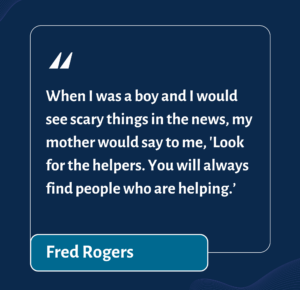 We can be among your helpers
Resources and Writing Guide
Judy Reidt-Parker of Start Early’s Consulting team shared the new PDG B-5 SMART Grant Writing Guide & Checklist, which you can find on the TA Collaborative’s resources page to support the application process.
Free subject matter expert consultations and pre-submission reviews are available
With support from the George Gund Foundation, the Bezos Family Foundation, and the Irving Harris Foundation, the TA Collaborative is offering free pre-submission reviews, always by more than one organization. We can also connect you with subject matter experts. We’re not federal reviewers and can’t predict your score, but we can offer honest advice from people who have read (and written) a lot of these applications. To indicate interest in having your draft application reviewed or any kind of help, click here.
We know turnaround is tight. Tell us when your draft will be ready and when you need it back, whether that’s 48 hours or 24. Sign up for a review here. The slides, recording, and grant writing guide are on the resource page.
Whether or not your state is funded, a strong plan can move your early childhood system forward. If several funded states take on similar work, we’ll create spaces for leaders to connect, share ideas and challenges, and co-create new solutions.
Explore More
Held and Housed: Webinar Recording
Archived Webinar November 3, 2026
This September 2026 webinar gave participants an in-depth look at the human toll homelessness takes on maternal and child health and how, with the right support, families can flourish.
Held and Housed Webinar: PPT Deck
Archived Webinar November 3, 2026
This September 2026 webinar gave participants an in-depth look at the human toll homelessness takes on maternal and child health and how, with the right support, families can flourish.
PDG B-5 SMART Grant: Resource Guide
Planning Tool October 28, 2026
This guide is for states applying for the 2026 PDG B-5 SMART Grant. It gathers vetted, mostly federal resources and organizes them by section of the application. The guide covers data infrastructure and data-sharing agreements, and each of the four cross-system scoring areas: Head Start integration, program integrity, unduplicated counts, and child welfare coordination. It also covers building a project performance evaluation plan. The October 2026 webinar recording and slides are included. The guide was compiled by the National TA Collaborative to Maximize Federal Early Childhood Investments.